

Monday, April 29, 2013

Friday, April 26, 2013
Delacroix

by Eugène Delacroix
Owner/Location: Private collection
Dates: circa 1855
Dimensions: Height: 30 cm (11.81 in.), Width: 42 cm (16.54 in.)
Medium: Pastel on paper
++++++++++++++++++++++++++++++++++++++
When the Loire Valley Château d'Augerville was owned by Monsieur Antoine Pierre Berryer, an advocate and counselor to the French parliament, one of his frequent guests was Eugène Delacroix. When it was later owned by Madame Alva Belmont, formerly Mrs. William Kissam Vanderbilt, she had the river flowing through the estate widened because she said, as her daughter Consuelo Vanderbilt later wrote, "This river is not wide enough." (Per Wiki)
The Château is now a hotel.

Tuesday, April 9, 2013

Friday, March 29, 2013
Sunday, March 24, 2013
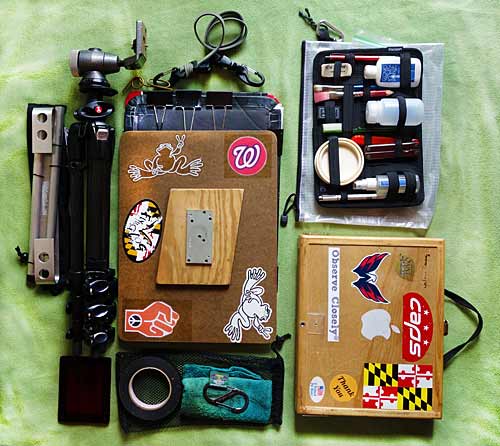
Plein air. Ready?


 More on the Lyme Art Colony is here.
(Images and quote courtesy of the Florence Griswold Museum.)
Sunday, March 17, 2013

Saturday, March 16, 2013
Stern Realities?

Frank Meadow Sutcliffe (England, 1853-1941)
Photogravure: 4.75 x 7.25; printed 1889-1891
Los Angeles County Museum of Art
This doesn't seem all that necessarily 'stern' to me.

Sunday, March 10, 2013
Vinnie woulda dug this!

Yes! Animated!
Vinnie would have been so yes to this, I think.
Friday, March 1, 2013

Sky

-- Blue Skies and Beyond | Painting the Sky with Pastel, Part 1
-- Pastel Pointers for Painting Clouds | Painting the Sky with Pastel Part 2
Deborah Secor Tips:
-- Chapter Seven - The Sky
-- Chapter Eight - Clouds
Loriann Signori: tips for painting clouds
I see sky - Maryland Pastel Society demo report
Monday, February 18, 2013
Codex Arundel

This 2-page spread is annotated with right-ways Italian, so you don't need a mirror to read it. I still can't. But the context of these sketches, judging from those on adjacent pages, is siege warfare and heavy artillery. Could the object on the left be a propellant-driven missile? Were these kinds of pyrotechnical objects known to him, via imports from China?
Friday, February 8, 2013
Tree Mentor

EDIT: It appears that this approach was begin by Edward Wesson. More of his work here. Hmmm.

Wednesday, February 6, 2013

Saturday, February 2, 2013


Wednesday, January 30, 2013
Flarz + Ootee

Sunday, January 13, 2013
Hugging a Pear

Thursday, January 10, 2013
Dynamo

++++++++++++++++++++++++++++++
More tips:
-- 5 Tips for Shooting Landscapes with Greater Impact
-- Seascape Photography Tips
-- 10 Tips for Landscape Photographers
-- 8 Tips for Long Exposure Photography
-- Aspect Ratios in Landscape Photography
-- Tips for Great HDR Sunsets (the non-auto way)
-- 15 Tips for Low Light Landscape Photography
-- How to Photograph Reflections in Water
-- 4 Tips for Shooting Drop Dead Gorgeous Waterfalls
Saturday, December 29, 2012
Escape and Hide

While most appear either snowbound or abandoned, some are downright delicious. A few semi-apropos book reviews are sprinkled among the pictures.
Enjoy.
Friday, December 28, 2012
Top Ten 2012 Art Tools and Materials

My discovery of some of these pre-date the beginning of the year, but this was the year each of them got under my skin and into a position of must-have. They are more or less in ranked order.
10. Caran d'Ache watercolor pencils: I had been playing around with these for a few years, but only intermittently. This year I started to use them much more often. I use them for under-drawing for pastel, watercolor, and gouache pieces. The lines and the colors bleed and run and kind of set the stage for later color work, and I like that layering. I also use them for finishing touches on watermedia pieces, both laid on dry and rubbed in with my fingers. The pencil can add an interesting extra scumbly texture that I like.
9. Uniball Signo white gel pen: I finally found a practical way to carry decent water-soluble, opaque white ink. Hurrah! I bought a dozen at least. (Life has taught me that the minute you become dependent on a thing, it's discontinued by the manufacturer. Hmm. Maybe I need to get another dozen.)
8. Cubix Round Zip Pencase: Only under duress will I admit to how many sketch cases I have bought over the years, tried, then discarded. It's embarrassing. Well, this year I finally found one that appears to be the perfect compromise between size and flexibility. Not too big that, when loaded, I'd never carry it. But big enough to hold what I think of (right now) as a minimal kit. What helped boost this case to the must-have list is how well the new watercolor box fitted in it. (See #4, below.) But you can also see in the picture above how well a couple of handfuls of watercolor pencils fit just as nicely in that same right-hand pocket, aided by a piece of elastic I sewed in. Flexibility! Adaptability!
7. BFK Rives 'tan' paper: I love working on toned paper and the failure of the otherwise excellent Stonehenge 'Kraft' brown paper for use in folded and sewn sketchbooks was a blow. So I was on the lookout for a replacement. I even made it my quest during a Spring visit to the legendary New York Central Art Supply. (That was fun!) There I bought samples of a number of exotic and wildly expensive toned papers from all over the world in the hopes of finding a new gem. No luck.
With reluctance I turned back to a paper that I had used for printmaking, BFK Rives 'tan'. I say "with reluctance" because though I loved the color and appreciated the quality, I loathed the company which had recently purchased the Rives mills in France: Canson. In my experience, every art product with the name Canson on it is total crap. But, despite some minor issues, the Rives paper seems to be working for me. This year I actually got to like it a lot for sketching and watermedia. I assume that as soon as Canson finds a way to destroy the quality of the Rives paper, it will not hesitate to do so. So I am using and enjoying it in small-sized orders.
6. Silver Brush Bristlon 'Filbert' brushes: I found a recommendation for these synthetic brushes on Roz Stendahl's blog and bought a few. I tried them with both the gouache and the pan watercolors and promptly bought a few more. I use a #2, a #4, and a #6, but mostly the 2s and 4s. The filbert is a good shape for me: I can get a thin line by turning it on end but can also lay on a good wet impasto swipe of gouache using the flat of it. Their best quality for me is their spring. I can dig around in a gooey glop of gouache or in a watercolor pan with no worries about damaging the brush. This is right now, for me, the perfect brush.
5. Schmincke gouache: I had been playing with gouache on and off for a few years and I enjoyed the way it let me work in opaque layers. So this year I decided to use it more often. I asked a lot of questions, tried a number of brands and techniques, and did some gouache paintings that I really enjoyed doing. So far, the brand that I like the best is Schmincke. They are wonderful on toned paper!
4. Derwent Academy watercolor box: I stumbled across the Derwent Academy Watercolor Pan Set in the big gift shop at the National Gallery of Art and I bought it. Don't ask me why. Fate intervened. The whole set, including twelve pan colors, costs far less than one single tube of artist quality watercolor paint. But voila! I pulled the plastic pan holder out and the box itself turned out to be the perfect fit for about seventeen Schmincke half and whole pan watercolors, a few indispensable DSmith colors squirted into half pans, and one sawed-off Silver Bristlon Filbert brush. The pans and the dots of magnet on the bottom of each fit exactly into the box. But the box is slim! It fits perfectly into the pocket of the Cubix Round Zip Pencase. The stars aligned, marrying together the box, the pans, the brush, and the case. It all clicked into place so seamlessly that who am I to quibble? Small miracles. But much appreciated.
3. TWSBI Micarta: This pen became a must-have stealthily. It's big and fat. It's funky-looking. It doesn't hold much ink. The nibs are not remarkable. (There isn't a stock italic available for it.) It even smells funny. But somehow I got quite attached to it. It's the micarta material that makes it so cozy. It goes with me everywhere.
2. Schmincke pan watercolors: I began messing around with Schmincke pan watercolors based, again, on a recommendation in Roz Stendahl's blog. These are now my go-to watercolors. The Schmincke and DSmith tube watercolors are just fine but Schmincke's pans seem richer and denser to me. (Much more so than other brands of pan watercolors.) I've had it patiently explained to me a number of times that the Schmincke tubes and the pans both use the exact same paint formulation. If that's the case, then the process of drying and hardening that the pans undergo must be what changes the apparent (to me) performance. The richness and denseness of some of the colors approaches that of gouache, which I love but which is not practical for a sketch kit. But here I have almost the perfect combination: nearly the richness of gouache with the ease of use and portability of watercolors.
1. Midori Traveler's Notebook: This was my favorite discovery of the year.
First, some background: I have never liked store-bought sketchbooks. They never had the kind of paper I wanted to use. For years I had been using the Circa/Rollabind system to bind my own sketchbooks and was quite happy with that. But a while ago I became less than enamored. I can't say why except that perhaps they began to look stupid to me. So I decided to learn how to bind my own sketchbooks. I spent a lot of time researching this and decided to hold off on attempting one with a cover until I could take a workshop or two. Among other aspects, the stitch diagrams scared me. But in the meantime I had made some mini pamphlet-sized sketchbooks with my favorite papers that turned out just fine. But they had no cover and so were not a practical carry-around solution.
I don't know where I first saw mention of the Midori Traveler Notebook system, but I think it may have been on the Fountain Pen Network. It's a simple system: a leather cover and replaceable inserts held in place with elastic bands in the spine. But reviewers were oddly devoted to their Midori notebooks. I had guessed this was because the dead-simple design was so easily customizable. I promptly bought the cover and then made my own inserts to fit. And just as promptly fell in love. I took the larger Midori on that sketch+shopping trip to NYC and it worked perfectly. The TWSBI Micarta pen rides in a loop in the passport-size Midori and both go everywhere with me.
More Midori info and links here.
++++++++++++++++
And so these are my Top Ten. I hope you enjoyed playing with your art toys as much as I did this past year. Looking forward to an equally adventurous 2013? Me too!
Sunday, December 23, 2012

Friday, December 21, 2012

Sunday, December 9, 2012
Happy Hockey!

Cheers!

Subscribe to:
Posts (Atom)